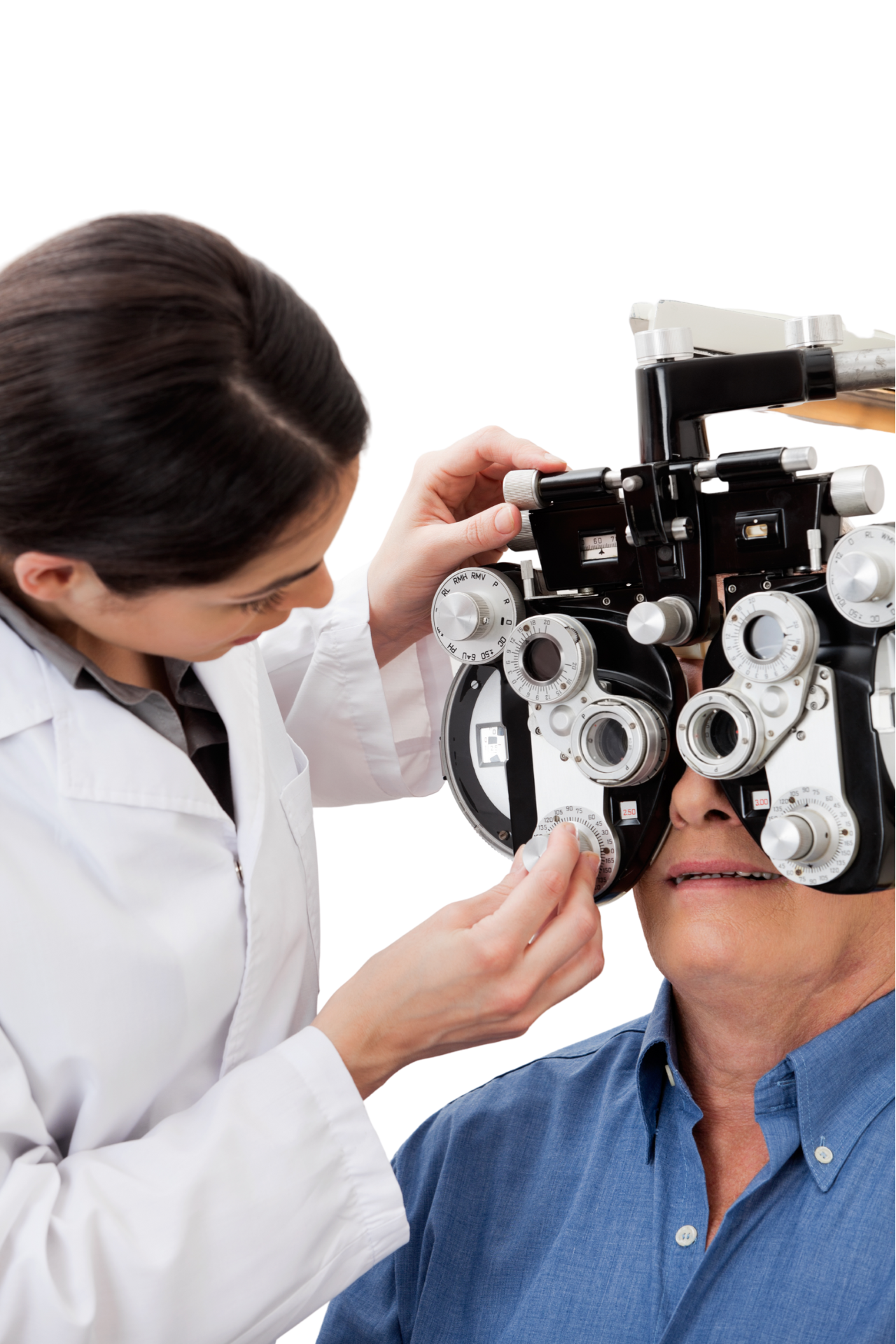
Searching for the best eye hospital in Ludhiana usually begins with a simple concern: blurred vision, a child struggling to see the board, increasing dependence on glasses, glare while driving, eye pressure concerns, double vision, or a problem that has not improved after a routine consultation. The search result may show many hospitals, but the more important question is not which name appears first. It is whether the hospital can correctly identify the problem, match you with the right eye-care specialty, perform the appropriate tests, explain the options clearly, and provide follow-up when it matters.
That distinction is important because eye care is not a single service. Cataract, glaucoma, corneal disease, refractive errors, childhood vision problems, squint and neuro-ophthalmic conditions require different examinations and treatment pathways. A centre that is suitable for one problem may not automatically be the right choice for another.
This patient guide explains how to evaluate an eye hospital in Ludhiana based on clinical relevance rather than marketing claims. It also shows how Baath Eye Care Centre at 329 CX, Model Town Extension, Ludhiana approaches comprehensive eye care through services that include cataract treatment, refractive surgery, glaucoma care, paediatric ophthalmology, cornea and ocular surface care, strabismus and neuro-ophthalmology. The aim is to help patients ask better questions before choosing where to seek care.
The Best Eye Hospital in Ludhiana Should Match the Problem to the Right Specialty
One of the clearest signs of a well-organised eye-care pathway is that every complaint is not treated as a routine “power check.” Symptoms can overlap. Blurred vision may be caused by refractive error, cataract, corneal irregularity, dry eye, retinal disease or optic nerve disease. Headache may have an eye-related cause, but it may also require broader medical assessment. Double vision can arise from eye alignment problems, cranial nerve dysfunction or other neurological causes.
For a patient, this means the first priority is accurate classification of the problem. The hospital should be able to decide whether you need a general ophthalmic evaluation, cataract assessment, corneal mapping, glaucoma work-up, paediatric eye examination, refractive surgery screening or neuro-ophthalmic evaluation. That is more useful than simply choosing a hospital because it advertises one popular procedure.
1. Start With the Symptoms, Not With a Procedure
Patients often arrive with a treatment already in mind. Someone who wants freedom from glasses may search for LASIK. An older adult with blurred vision may assume cataract. A parent may think a child simply needs spectacles. A more reliable approach is to begin with a complete examination and let the diagnosis determine the treatment.
For example, a LASIK consultation should not begin with the assumption that surgery will be performed. The U.S. Food and Drug Administration notes that refractive surgery candidacy depends on factors such as prescription stability, eye health, medical conditions and other risk factors. A detailed pre-operative assessment is therefore essential before any recommendation is made.
For Baath Eye Care Centre’s refractive surgery information, see: https://baatheyecare.com/refractive-surgery-in-ludhiana/
2. For Cataract, Look Beyond the Word “Surgery”
Cataract is a clouding of the eye’s natural lens and commonly causes blurred or hazy vision, glare, difficulty with night driving and reduced contrast. The National Eye Institute explains that cataract surgery removes the cloudy lens and replaces it with an artificial lens. The decision to operate depends on how much the cataract is affecting vision and daily life, along with the patient’s overall eye health.
When comparing options for the best cataract hospital in Ludhiana, useful questions include: Has the cataract diagnosis been confirmed by a dilated examination? Have the retina and optic nerve been assessed? Has the patient’s lifestyle been discussed before choosing an intraocular lens? Are the benefits, limitations and follow-up requirements explained in understandable language?
Baath Eye Care Centre’s official website lists cataract care and phacoemulsification surgery among its services. It also provides information about cataract evaluation and intraocular lens options on its dedicated page.
Cataract service page: https://baatheyecare.com/cataract-surgery-in-ludhiana/
3. For LASIK and Refractive Surgery, Screening Is More Important Than the Advertisement
A good refractive surgery centre should be willing to tell some patients that LASIK is not the right procedure for them. That is a strength, not a limitation. Prescription stability, corneal shape and thickness, tear-film health, pupil characteristics, overall eye health and individual expectations all matter.
Baath Eye Care Centre’s refractive surgery page states that its pre-operative assessment can include corneal mapping, refractive error analysis, tear-film assessment and retinal examination. The centre’s main website also lists corneal topography and pachymetry among its diagnostic technologies. These investigations are relevant because refractive surgery changes the cornea and should only be considered after a careful suitability assessment.
If you are searching for the best LASIK hospital in Ludhiana or the best refractive surgery hospital in Ludhiana, ask what happens when the screening shows that LASIK is not advisable. A patient-focused consultation should explain alternatives or recommend continued use of glasses or contact lenses when that is the safer choice.
4. Glaucoma Care Requires More Than a Single Eye-Pressure Reading
Glaucoma is a group of eye diseases that can damage the optic nerve. The National Eye Institute notes that the most common forms may have no early symptoms, which is why a comprehensive eye examination is important. It also explains that glaucoma assessment may include a dilated examination and visual field testing, while treatment can involve medicines, laser procedures or surgery depending on the type and stage.
This is an important point for anyone searching for the best glaucoma hospital in Ludhiana. Eye pressure is useful, but pressure alone does not define the complete glaucoma picture. The optic nerve, visual field, drainage angle and other clinical findings may need to be considered. Follow-up is also important because glaucoma management often focuses on protecting remaining vision over time.
Baath Eye Care Centre’s glaucoma clinic information is available at: https://baatheyecare.com/glaucoma-clinic-in-ludhiana/
5. Cornea Care Matters Before LASIK and Beyond LASIK
The cornea is the clear front surface of the eye. Problems affecting its shape, transparency or surface can cause distorted or fluctuating vision. Corneal conditions may include keratoconus, infections, scars, dry eye and other ocular-surface disorders. Corneal evaluation is also a key part of refractive surgery screening.
Patients searching for the best cornea hospital in Ludhiana should ask whether the centre can evaluate corneal shape and thickness when clinically required, and whether it can distinguish between a simple refractive error and a corneal problem that needs a different treatment pathway.
Baath Eye Care Centre lists a dedicated Cornea & Ocular Surface Clinic and corneal topography/pachymetry technology on its official website.
Cornea and ocular surface service page: https://baatheyecare.com/cornea-ocular-surface-clinic-in-ludhiana/
6. Children Need an Eye Examination Designed for Children
Children do not always know that one eye sees poorly. They may compensate with the better-seeing eye and never complain. The American Association for Pediatric Ophthalmology and Strabismus notes that amblyopia can be difficult for parents to detect and that early identification is important because treatment is more effective while the visual system is developing.
That is why choosing the best paediatric eye hospital in Ludhiana is not simply about finding a general eye clinic that also sees children. A paediatric eye examination may need age-appropriate vision testing, assessment of eye alignment, cycloplegic refraction and evaluation for amblyopia or other developmental problems.
Baath Eye Care Centre’s website identifies paediatric ophthalmology as a dedicated service and lists Dr. Jagroop Singh Baath as fellowship-trained in Paediatric Ophthalmology, Strabismus and Neuro-Ophthalmology at L.V. Prasad Eye Institute.
Paediatric eye-care page: https://baatheyecare.com/paediatric-eye-hospital-in-ludhiana/
7. Neuro-Ophthalmic Symptoms Need the Right Clinical Route
Some visual complaints sit at the intersection of the eye and the nervous system. Examples include new double vision, unexplained visual field loss, optic nerve abnormalities or visual symptoms occurring with neurological signs. These problems may require a different level of assessment from a routine spectacle check.
For people searching for the best neuro-ophthalmology hospital in Ludhiana, the most important factor is access to appropriate neuro-ophthalmic evaluation and a clear plan for further investigation or referral when needed. Baath Eye Care Centre lists a dedicated Neuro-Ophthalmology Clinic and identifies Dr. Jagroop Singh Baath’s fellowship training in this field.
Neuro-ophthalmology service page: https://baatheyecare.com/neuro-ophthalmology-clinic-in-ludhiana/
What Should a Comprehensive Eye Examination Include?
There is no single test that is necessary for every patient. The examination should be tailored to age, symptoms, medical history and suspected diagnosis. However, a comprehensive visit commonly begins with visual acuity and refraction, followed by examination of the front and back of the eye. Depending on the complaint, additional testing may be recommended.
Cataract-related complaints: Dilated examination, assessment of the lens and retina, and measurements needed for surgical planning if surgery is appropriate.
Glaucoma risk or follow-up: Eye-pressure measurement along with optic nerve evaluation and other tests such as visual-field assessment when indicated.
LASIK or refractive surgery evaluation: Stable refraction, corneal mapping/topography, corneal thickness assessment, tear-film and ocular-surface evaluation, and a wider eye-health examination.
Childhood vision concerns: Age-appropriate visual acuity, eye alignment assessment, cycloplegic refraction and evaluation for amblyopia, squint or structural abnormalities.
Corneal symptoms: Slit-lamp examination and, when indicated, corneal topography/pachymetry or additional ocular-surface testing.
Double vision or unexplained visual symptoms: Eye-movement assessment, pupil and optic nerve examination, visual-field testing and other investigations or referrals based on the clinical findings.
How to Compare an Eye Hospital Near You Without Relying Only on Rankings
The phrase “eye hospital near me” is useful for finding nearby options, but proximity should be only one part of the decision. For routine care, convenience can make follow-up easier. For a complex or specialised condition, the availability of the appropriate expertise and diagnostic pathway may be more important than saving a few minutes of travel.
Before booking, consider the following practical questions:
- Does the centre provide the specialty relevant to your current problem?
- Will a qualified ophthalmologist evaluate the condition and explain the diagnosis?
- Are additional tests recommended because they are clinically useful, and is their purpose explained?
- If surgery is being discussed, are non-surgical options, limitations and realistic expectations also covered?
- Is there a clear follow-up plan after treatment or surgery?
- Can the centre coordinate care when the problem crosses specialties, such as cornea plus refractive surgery or eye symptoms plus neurological concerns?
A Closer Look at Baath Eye Care Centre, Ludhiana
Baath Eye Care Centre is located at 329 CX, Model Town Extension, Model Town, Ludhiana, Punjab 141002. Its official website lists comprehensive eye-care services that include cataract, paediatric eye care, refractive surgery, glaucoma, strabismus, neuro-ophthalmology, cornea and ocular surface care, low vision, specialist contact lenses, eye laser procedures and other ophthalmic services.
The centre is led by Dr. Jagroop Singh Baath, whose profile on the hospital website lists DO, MS and FCO (LVPEI), along with fellowship training in Paediatric Ophthalmology, Strabismus and Neuro-Ophthalmology at L.V. Prasad Eye Institute, Hyderabad. The website also states more than 25 years of clinical experience.
The hospital website lists diagnostic and surgical technologies including an autorefractor, contact tonometer, corneal topography and pachymetry, direct and indirect ophthalmoscopy, green laser, YAG laser, Carl Zeiss microscope and an Oertli Catarax 3 phaco system. As with any treatment decision, the technology used for an individual patient should depend on the diagnosis and the clinician’s assessment rather than on a device name alone.
Official website: https://baatheyecare.com/
Contact and appointment information: https://baatheyecare.com/contact-baath-eye-care-centre/
When Should You Seek Urgent Eye Care?
Some symptoms should not wait for a routine appointment. Seek urgent medical evaluation for sudden loss of vision, severe eye pain, a very red painful eye with blurred vision, sudden new double vision, significant eye injury, or a sudden shower of new floaters or flashes especially if accompanied by a curtain-like shadow in the vision. The National Eye Institute also advises urgent assessment for symptoms that can occur with angle-closure glaucoma, including intense eye pain, nausea, red eye and blurry vision.
After cataract surgery or another eye procedure, contact the treating eye doctor promptly if there is new vision loss, severe or persistent pain, marked redness, or sudden flashes and floaters. Post-operative instructions from the treating surgeon should always take priority over general online information.
Choosing the Best Eye Hospital in Ludhiana: A Practical Decision Checklist
A useful way to make the decision is to separate the search into four steps.
Step 1: Define the problem. Write down the main symptom, how long it has been present, whether it affects one or both eyes, and whether it is constant or intermittent. Bring your current glasses, previous reports and a list of medicines.
Step 2: Match the problem to the specialty. Cataract, glaucoma, cornea, LASIK screening, paediatric ophthalmology and neuro-ophthalmology are different clinical pathways. Choose a centre that can evaluate the relevant area.
Step 3: Evaluate the consultation quality. The diagnosis should be explained in plain language. You should understand what has been found, which tests are needed, what the treatment choices are and what could happen if treatment is delayed.
Step 4: Plan for follow-up. Eye care does not end when a procedure is completed. Follow-up is especially important after surgery and for long-term conditions such as glaucoma, corneal disease or childhood amblyopia.
Exactly 10 Frequently Asked Questions
Which is the best eye hospital in Ludhiana for complete eye care?
There is no single “best” choice for every patient. The right hospital should match your condition with the appropriate specialty, provide a thorough examination, explain treatment choices clearly and offer reliable follow-up. Baath Eye Care Centre provides multiple ophthalmic services in Ludhiana, including cataract, refractive surgery, glaucoma, paediatric ophthalmology, cornea care, strabismus and neuro-ophthalmology.
How do I know whether I need a cataract specialist or just new glasses?
Blurred vision can come from several causes. A comprehensive eye examination can determine whether the problem is refractive error, cataract, corneal disease, retinal disease or another condition. If cataract is present and significantly affects daily activities, the ophthalmologist can discuss whether surgery is appropriate.
What should I check before choosing a LASIK hospital in Ludhiana?
Ask about pre-operative screening, prescription stability, corneal shape and thickness, tear-film health, overall eye health, realistic expectations and what happens if you are not a suitable LASIK candidate. A good refractive consultation should focus on suitability first, not on selling a procedure.
Is eye pressure alone enough to diagnose glaucoma?
No. Eye pressure is an important risk factor, but glaucoma is defined by damage to the optic nerve. A complete glaucoma assessment may include optic nerve examination, visual-field testing and other investigations depending on the patient’s risk and findings.
When should a child see a paediatric eye specialist?
A child should be evaluated if there is squint, abnormal eye movement, frequent eye rubbing, difficulty seeing the board, persistent headaches with visual tasks, unequal vision, a failed school screening or any concern about visual development. Children may not report poor vision themselves, so screening and timely assessment are important.
Can corneal problems affect LASIK eligibility?
Yes. Corneal shape, thickness and surface health are central to refractive surgery planning. Conditions such as keratoconus or significant ocular-surface disease may change the treatment recommendation. Corneal topography and pachymetry may be used when clinically indicated.
What symptoms may need a neuro-ophthalmology consultation?
New or unexplained double vision, optic nerve abnormalities, certain visual-field defects, unexplained vision loss and visual symptoms associated with neurological signs may need neuro-ophthalmic evaluation. Sudden symptoms should be assessed promptly.
Is the closest “eye hospital near me” always the right option?
Not necessarily. Proximity is helpful, particularly for follow-up, but the hospital should also have the expertise relevant to your condition. For complex problems, appropriate specialist care and diagnostic support may matter more than distance alone.
What should I take to my first eye-hospital appointment?
Bring your current spectacles or contact-lens details, previous prescriptions, eye-scan or surgery reports, a list of current medicines, details of diabetes or blood pressure if relevant, and notes about when the symptoms started. This can help the ophthalmologist understand changes over time.
How can I book an appointment at Baath Eye Care Centre in Ludhiana?
Baath Eye Care Centre lists its Ludhiana address as 329 CX, Model Town Extension, Model Town, Ludhiana, Punjab 141002. The official website lists the consultation phone number as +91 62 62 62 77 55. Patients can also use the contact page on the hospital website for appointment information.
Book an Eye Consultation in Ludhiana
If you are comparing options for the best eye hospital in Ludhiana, start with the problem you need solved and the quality of the evaluation you receive. Baath Eye Care Centre offers consultations and treatment pathways across several eye-care specialties from its Model Town Extension centre.
Address: 329 CX, Model Town Extension, Model Town, Ludhiana, Punjab 141002
Phone: +91 62 62 62 77 55
Website: https://baatheyecare.com/
For appointments, service information and directions, use the hospital’s official contact page: https://baatheyecare.com/contact-baath-eye-care-centre/
Conclusion
Choosing the best eye hospital in Ludhiana should be a clinical decision, not simply a ranking decision. The right centre is one that identifies the real cause of the problem, connects the patient with the appropriate specialty, uses investigations for a clear reason, explains options without unnecessary promises and provides a follow-up plan.
Whether the concern is cataract, glaucoma, LASIK suitability, corneal disease, a child’s vision, squint or a neuro-ophthalmic symptom, the quality of the first evaluation shapes everything that follows. Baath Eye Care Centre’s range of dedicated services allows patients in Ludhiana to begin that evaluation within a comprehensive ophthalmic setting.
Medical note: This article is for general educational information and does not replace an individual eye examination or medical advice from a qualified ophthalmologist.