A change in eyesight does not always mean that someone needs new spectacles. Blurred vision can develop because of a refractive error, cataract, an irritated cornea, a retinal condition or an issue affecting the optic nerve. Some changes are gradual and can be assessed at a planned appointment; others require immediate medical attention. Knowing the difference helps patients reach appropriate care without delay.
If you are searching for an eye hospital in Ludhiana, a useful first question is not simply where to go. It is: what is happening to my vision, how quickly did it start, and which type of assessment could help? This guide explains common symptoms, the role of eye-care specialties, and practical steps before an appointment. It is educational information, not an online diagnosis.
When is an eye problem an emergency?
Sudden loss of vision in either eye, a new dark curtain or shadow across vision, flashes of light with many new floaters, significant eye injury, or severe eye pain should be treated as urgent. These symptoms can signal conditions in which delaying assessment may threaten sight. Seek emergency ophthalmic evaluation immediately, including outside routine clinic hours when necessary. Do not drive yourself if your vision is affected.
A suddenly painful, red eye accompanied by blurred vision, headache, nausea or vomiting also needs immediate assessment. Acute angle-closure glaucoma is one possible cause, but other serious eye conditions can present similarly. A chemical splash requires immediate flushing with clean running water or saline for at least 20 minutes while arranging urgent medical care; do not wait to finish rinsing before seeking help.
Sudden double vision, especially with weakness, speech difficulty, severe headache or facial drooping, can be a neurological emergency. Go to an emergency department rather than waiting for an ordinary eye appointment. A patient should not try to determine the exact diagnosis from a search result or a symptom checklist.
A simple way to describe your symptoms to an eye doctor
Clear details are often more valuable than attempting to name the disease yourself. Explain whether the problem began within minutes, over days or gradually over months. Mention whether it affects one eye or both, whether vision is blurred at distance or near, and whether it comes and goes.
Describe associated features: pain, redness, light sensitivity, watering, itching, discharge, headache, halos, flashes, new floaters, double vision or a shadow in the field of vision. If you have diabetes, high blood pressure, an eye injury, previous surgery, a family history of glaucoma, or use contact lenses, mention this at the start of the consultation.
You can check which eye is affected by covering one eye and then the other, provided doing so is safe. This simple observation does not replace an examination, but may help you explain the complaint. Do not delay emergency assessment to perform self-tests.
Blurred vision: spectacles, cataract or another condition?
Blurred vision is a symptom, not a diagnosis. If distance signs are unclear but near objects remain sharp, a refractive error such as myopia may be involved. Difficulty with close reading after middle age may reflect presbyopia. An examination and refraction can help determine whether spectacles or contact lenses are appropriate.
Gradually increasing glare from headlights, faded colours and difficulty reading even with updated glasses can occur with cataract, in which the natural lens becomes cloudy. Cataracts often develop slowly and are assessed according to how much they interfere with daily activities, examination findings and the patient’s preferences. Cataract surgery may be considered when visual function is meaningfully affected; surgery is not automatically required at the first sign of lens clouding.
Blur can also occur because of dry eye, corneal disorders, retinal disease or glaucoma. Persisting blur, sudden deterioration or vision that does not improve with a refraction deserves a medical eye examination. At Baath Eye Care Centre, cataract care is listed among the services on the official website.
Read about the cataract service: https://baatheyecare.com/cataract-surgery-in-ludhiana/
Thinking about LASIK? Start with suitability, not a procedure name
People who depend on spectacles may search for a LASIK hospital in Ludhiana or refractive surgery hospital in Ludhiana. Yet laser vision correction is not appropriate for everyone. A professional assessment looks at the stability of the spectacle prescription, corneal shape and thickness, eye-surface health, pupil-related concerns, other eye diseases, age and general medical history.
A patient with significant dry eye, certain corneal abnormalities or an unstable prescription may require treatment or further investigation before a refractive procedure can be considered. Pregnancy or breastfeeding, some systemic conditions and particular medications may also affect timing or candidacy. An honest suitability discussion should include potential complications, postoperative care, residual spectacle needs and available alternatives.
LASIK and other refractive procedures are designed to reduce dependence on corrective lenses, not guarantee perfect unaided vision or eliminate all future need for glasses. The centre lists both LASIK and broader refractive surgery services; patients should verify which option, if any, is appropriate after examination.
Explore LASIK assessment information: https://baatheyecare.com/lasik-eye-surgery-in-ludhiana/
Eye pressure and glaucoma: why symptoms are not enough
Glaucoma describes a group of conditions involving progressive optic-nerve damage. The common open-angle form often has no noticeable early symptoms, so being comfortable and seeing clearly does not rule it out. Risk assessment is especially relevant when there is a family history of glaucoma, older age, elevated eye pressure or other eye findings identified by a clinician.
An eye examination may involve measuring intraocular pressure, assessing the optic nerve and, when indicated, visual-field testing and optic-nerve imaging. A single pressure measurement is not enough by itself to confirm or exclude glaucoma. Some people develop damage despite pressures within the usual range, while others have higher pressures without established optic-nerve damage.
Treatment may involve prescription eye drops, laser or surgery according to the type and severity of glaucoma. The goal is typically to reduce the risk of further vision loss rather than restore nerve tissue already damaged. A glaucoma hospital in Ludhiana should provide clear follow-up guidance because long-term monitoring is central to management.
See the glaucoma clinic page: https://baatheyecare.com/glaucoma-clinic-in-ludhiana/
Red, irritated or painful eyes: when the cornea needs attention
Redness may come from allergy, dryness, conjunctivitis or irritation, but redness paired with pain, reduced vision or light sensitivity can indicate something more serious. Contact lens wearers with a painful, red eye need prompt assessment because corneal infection can threaten vision. Stop wearing contact lenses until a qualified professional advises that it is safe to resume.
The cornea is the clear front window of the eye. It provides a large part of the eye’s focusing power and can be affected by injury, infection, scarring, keratoconus and surface disorders. Distorted images, changing spectacle power, ghosting around lights or troublesome light sensitivity may justify corneal evaluation. Some conditions require corneal mapping or other specialist tests.
A cornea hospital in Ludhiana or a dedicated corneal clinic can evaluate whether symptoms relate to the eye surface or deeper structures. Avoid using leftover antibiotic, steroid or numbing drops without medical advice. Steroids can worsen certain infections, and self-treatment may mask important warning signs.
Learn about corneal and ocular-surface services: https://baatheyecare.com/cornea-ocular-surface-clinic-in-ludhiana/
Children’s eye care: signs parents should not overlook
Children may not realise that their vision is different from that of other children. Parents might notice frequent squinting, sitting very close to screens, an unusual head tilt, closing one eye in bright light, difficulty following a moving object, or one eye turning inward or outward. These are reasons for a paediatric eye assessment rather than assumptions about screen habits.
Amblyopia, sometimes called lazy eye, develops when vision does not develop normally in one or both eyes. Causes may include unequal refractive errors, eye misalignment or a physical obstruction such as cataract. Treatment depends on the cause and age and may involve spectacles, patching, prescribed drops or other care. Earlier identification generally offers a greater opportunity to improve visual development.
A white pupil in photographs, especially if repeatedly seen, should be assessed urgently by an eye professional. It may have harmless explanations but can also be a sign of a significant condition. Premature infants may require time-sensitive retinal screening under an established neonatal eye-care pathway. The website identifies paediatric eye care and squint-related services, but individual assessments should be arranged through the centre.
Read about paediatric eye care: https://baatheyecare.com/paediatric-eye-hospital-in-ludhiana/
Double vision, drooping lids and unexplained sight changes
Not all sight problems originate within the eyeball. Neuro-ophthalmology explores how the optic nerves, eye movements and visual pathways relate to the brain and nervous system. Symptoms that might lead to referral include persistent or newly developed double vision, unexplained visual loss, unusual pupil findings or certain patterns of eye-movement difficulty.
Double vision that disappears when either eye is covered can occur when the eyes are not properly aligned. Double vision that remains while viewing with only one eye may arise from a different optical cause. These observations can help clinicians narrow the possibilities, but neither finding is sufficient for self-diagnosis.
Because the possible causes range from relatively straightforward to urgent neurological disorders, the timing and associated symptoms matter. A new sudden problem, particularly with weakness, severe headache, speech changes or difficulty walking, needs emergency evaluation. For non-emergency ongoing concerns, a neuro-ophthalmology clinic can coordinate the appropriate examination or further referral.
Find the neuro-ophthalmology service: https://baatheyecare.com/neuro-ophthalmology-clinic-in-ludhiana/
Retinal symptoms and diabetes-related vision concerns
The retina is the light-sensitive tissue at the back of the eye. It can be affected by diabetes, ageing, vascular conditions, inflammation, tears and detachment. Early retinal disease may have no obvious symptoms, especially in people with diabetes. This is why retinal assessment is not limited to people who complain of blur.
Someone with diabetes should discuss a dilated retinal examination schedule with their treating clinician, even if they currently see well. Many patients require examination at least annually, although the interval changes according to the type of diabetes, pregnancy status, retinal findings and medical advice. Good blood-glucose and blood-pressure management supports eye health but does not replace retinal screening.
Flashes of light, a sudden shower of floaters, loss of side vision or a curtain-like shadow warrant urgent examination for a retinal tear or detachment. Do not assume these changes are ordinary age-related floaters. The official centre website includes eye-laser and other eye services; the precise assessment or treatment required must be confirmed clinically.
What typically happens at a comprehensive eye examination?
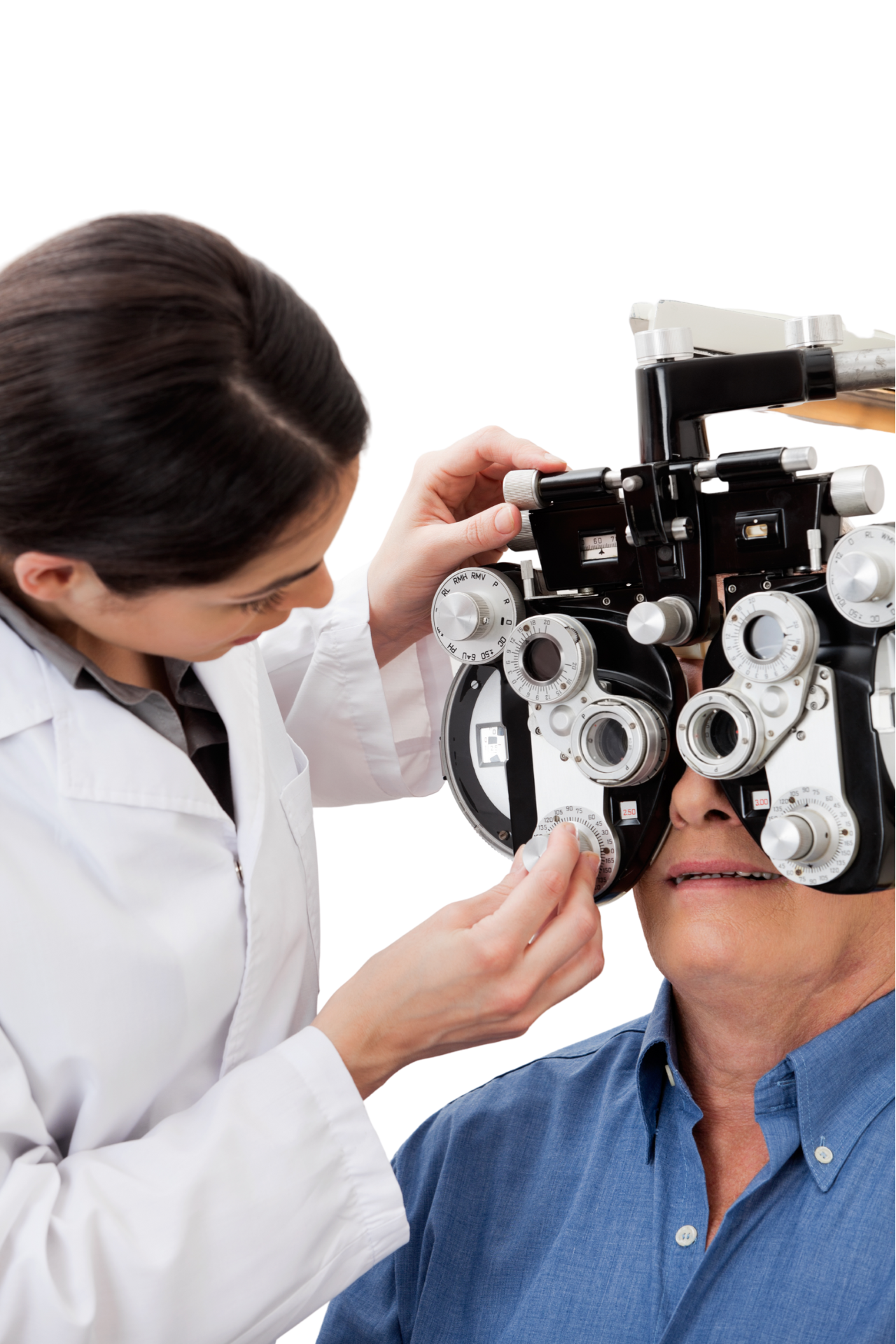
The examination is tailored to the complaint. It may begin with vision testing, a review of current spectacles and medical history, and refraction to assess focusing errors. The clinician may then inspect the lids, tear film, cornea, anterior chamber and lens with a slit lamp. Eye pressure may be measured and the optic nerve or retina assessed, sometimes after dilating drops.
Additional tests are selected for a reason. Corneal topography helps map corneal shape when keratoconus or refractive surgery is being considered. Visual-field assessment can help evaluate glaucoma and some neurological complaints. Retinal imaging may be useful in selected conditions. Not every patient needs all available tests, and a larger number of tests is not a measure of quality by itself.
Dilating drops can temporarily blur near vision and increase light sensitivity. Ask the clinic whether you should arrange someone to accompany you or avoid driving afterward. Bring your current glasses, previous eye records, prescriptions, contact lens details and a list of medicines. Explain any allergies and prior reactions to eye drops.
Choosing the appropriate appointment rather than choosing a treatment in advance
Patients often begin with a treatment keyword such as cataract surgery, LASIK or glaucoma. A more useful approach is to share the actual problem with the appointment team. A patient who says “I cannot read road signs clearly” may need refraction; someone who says “I see a dark curtain in one eye” needs urgent triage instead of a routine glasses visit.
Ask whether your concern requires a routine comprehensive examination, a subspecialty assessment or immediate emergency care. Ask whether previous reports should be brought and whether contact lenses need to be discontinued before any proposed refractive testing. For a child, describe behaviour noticed at home or school and bring any screening notes.
A hospital’s website can help you see which services are advertised, but a web page cannot establish the right treatment for an individual. A diagnosis depends on history, examination and relevant investigations. Respectful communication, clear explanations, informed consent and a realistic follow-up plan are practical things patients can look for during their care.
When should people without symptoms consider an eye check?
Absence of symptoms does not guarantee that the eyes are free of disease. People with diabetes, a family history of glaucoma, previous significant eye injury, high refractive errors or long-term use of certain medications may need planned reviews. The interval should be determined with an eye-care professional according to individual risks.
Children need age-appropriate vision screening, including screening during preschool years, because reduced vision in one eye can be missed at home. Older adults may benefit from monitoring for cataract, glaucoma and retinal disease. A person experiencing persistent eye strain, headaches associated with reading or changing spectacle requirements may also need an examination, although headaches can have many non-eye causes.
Office workers should distinguish temporary screen-related discomfort from a persistent visual problem. Blink regularly, adjust lighting and screen positioning and take breaks. If discomfort persists, do not rely only on over-the-counter drops; evaluation may reveal dryness, an uncorrected prescription or another condition.
Eye care in Ludhiana: practical details for local patients
Baath Eye Care Centre lists its Ludhiana facility at 329 CX, Model Town Extension, Model Town, Ludhiana, Punjab 141002. The official website also lists a Zira centre. If you are searching for an eye hospital near me from Model Town or elsewhere in Ludhiana, confirm which location is appropriate for your examination and whether the required service is offered at that location.
The contact page provides an appointment telephone number, email and OPD hours. Call before travelling to confirm the current schedule, the relevant specialist’s availability and whether your symptoms require urgent assessment. A standard appointment line should not substitute for emergency services after hours. Patients travelling from neighbouring areas should ask about any preparation and anticipated follow-up before making plans.
It may be useful to prepare three questions: “What are the possible causes of my symptoms?”, “Which tests would help clarify the diagnosis?” and “What warning signs mean I should return urgently?” Understanding the next step is as important as receiving a prescription.
Official contact and appointment details: https://baatheyecare.com/contact-baath-eye-care-centre/
Frequently asked questions
1. Can blurry vision be a sign of something other than weak eyesight?
Yes. Refractive error is one possibility, but cataract, dry eye, corneal changes, glaucoma and retinal problems can also affect vision. A proper examination is needed, especially when blur is new, persistent or worsening.
2. Does every person with cataract need surgery immediately?
No. The decision depends on the effect on daily activities, examination findings and individual circumstances. An eye doctor can explain monitoring, updated glasses where helpful, and when surgery may be appropriate.
3. Is LASIK suitable for anyone who wears glasses?
No. Eye-surface health, corneal measurements, prescription stability and other factors affect suitability. Some people need an alternative approach or are advised against refractive surgery.
4. Can glaucoma exist without pain or obvious vision problems?
Yes. Common open-angle glaucoma may develop silently. An examination of the optic nerve, pressure assessment and other tests when indicated can identify concerning changes.
5. Why does a contact lens wearer with a painful red eye need prompt care?
Contact lenses can increase the risk of corneal infection. Pain, redness, light sensitivity or declining vision requires prompt eye assessment. Remove the lenses and do not restart them without professional advice.
6. When should I take a child for an eye examination?
Arrange assessment if you see squinting, an eye turn, a head tilt, unusually close viewing or difficulty with schoolwork. Routine age-appropriate screening also matters because some childhood vision problems have few visible signs.
7. Are sudden flashes and floaters an emergency?
New flashes accompanied by many new floaters, reduced vision or a curtain-like shadow require urgent dilated retinal assessment. A retinal tear or detachment must be excluded promptly.
8. Can double vision be related to the nervous system?
Sometimes. Double vision can relate to eye alignment, optical problems or neurological conditions. Sudden onset, especially with weakness, severe headache or speech problems, requires emergency care.
9. How often should someone with diabetes have an eye examination?
Many people with diabetes need a dilated retinal examination at least yearly, but individual schedules vary according to diabetes type, retinal findings and clinical advice. Do not wait for vision to become blurry.
10. How can I arrange an eye consultation in Ludhiana?
Contact Baath Eye Care Centre on +91 62 62 62 77 55 or use its official contact page. Explain your main symptom, when it began and whether it is urgent. For sudden severe symptoms, seek emergency services immediately.
Plan your visit to Baath Eye Care Centre
Ludhiana centre: 329 CX, Model Town Extension, Model Town, Ludhiana, Punjab 141002.
Telephone: +91 62 62 62 77 55. Email: info@baatheyecare.com. Website: https://baatheyecare.com/. Listed routine OPD hours: Monday to Saturday, 9:00 AM to 6:00 PM. Please confirm hours and appointment availability with the centre before travelling. The information above refers to the centre’s official contact listing, not a guarantee of emergency availability.
Conclusion: start with your symptoms and seek the right assessment
The right first step depends on what you are experiencing. Gradual blur, a changing spectacle prescription, glare, dry-eye discomfort and childhood vision concerns often begin with a planned examination. Sudden visual loss, severe pain, alarming flashes and floaters, or neurological warning signs should never wait for a routine booking.
For people considering an eye hospital in Ludhiana, the most useful questions are about timely assessment, the reason for recommended tests, treatment suitability and follow-up. Baath Eye Care Centre lists cataract, LASIK, glaucoma, cornea, paediatric and neuro-ophthalmology services on its website. An in-person clinical examination can establish which pathway is appropriate for your individual concern.