When you book an eye appointment, you may know that something feels different, but not know which examination you need. Perhaps your spectacles no longer seem right. Maybe your child moves closer to the television, or a parent is struggling with glare after sunset. For many people, the uncertainty begins before they even enter the examination room: Should I bring my old prescription? Will the doctor dilate my pupils? What is an eye-pressure test? And what happens if the tests reveal a problem?
This practical guide explains how to prepare for a first consultation at an eye hospital in Ludhiana, what common examinations can reveal, why certain patients need additional assessment and how to use your results to make informed decisions. It complements, rather than repeats, information about individual surgeries and specialties.
Why an eye examination is more than a glasses-power check
A refraction test estimates the lens power needed to see clearly. It is useful, but it does not by itself establish whether your cornea, lens, optic nerve and retina are healthy. Someone can read a chart fairly well yet have early glaucoma or changes related to diabetes. Conversely, blurry vision does not automatically mean cataract or that a stronger pair of spectacles is needed.
A comprehensive eye assessment may include a discussion of symptoms, vision measurement, refraction, examination of the front of the eye, eye-pressure measurement and, where indicated, evaluation of the retina and optic nerve. The precise tests depend on age, medical history and the reason for attending. This is also why a quick optical screening and a full medical eye examination are not interchangeable.
Before your appointment: what to bring and what to tell the eye doctor
Start with a simple symptom timeline. Note whether the change is in one eye or both, whether it appeared suddenly or gradually, and whether it occurs during reading, driving, using a screen or looking into bright light. Record associated symptoms such as headaches, watering, discharge, double vision or light sensitivity. These details help the ophthalmologist distinguish a focusing issue from an eye-health concern.
Bring your current spectacles and, if available, an older pair, your last prescription, earlier eye-test reports, a list of medicines and eye drops, and details of past operations or eye injuries. Mention diabetes, high blood pressure, autoimmune conditions, regular steroid use and any family history of glaucoma. If you wear contact lenses, tell the clinic before a corneal measurement or refractive-surgery assessment, because a temporary period without lenses may be recommended depending on the test and lens type.
If you might need dilating drops, consider arranging someone to accompany you. Dilated pupils can make near work uncomfortable and increase light sensitivity for several hours. Avoid driving until your vision is comfortable and the clinician says it is safe. Ask at the time of booking whether dilation is likely and how long your visit may take.
What the common eye tests actually measure
1. Visual acuity and refraction
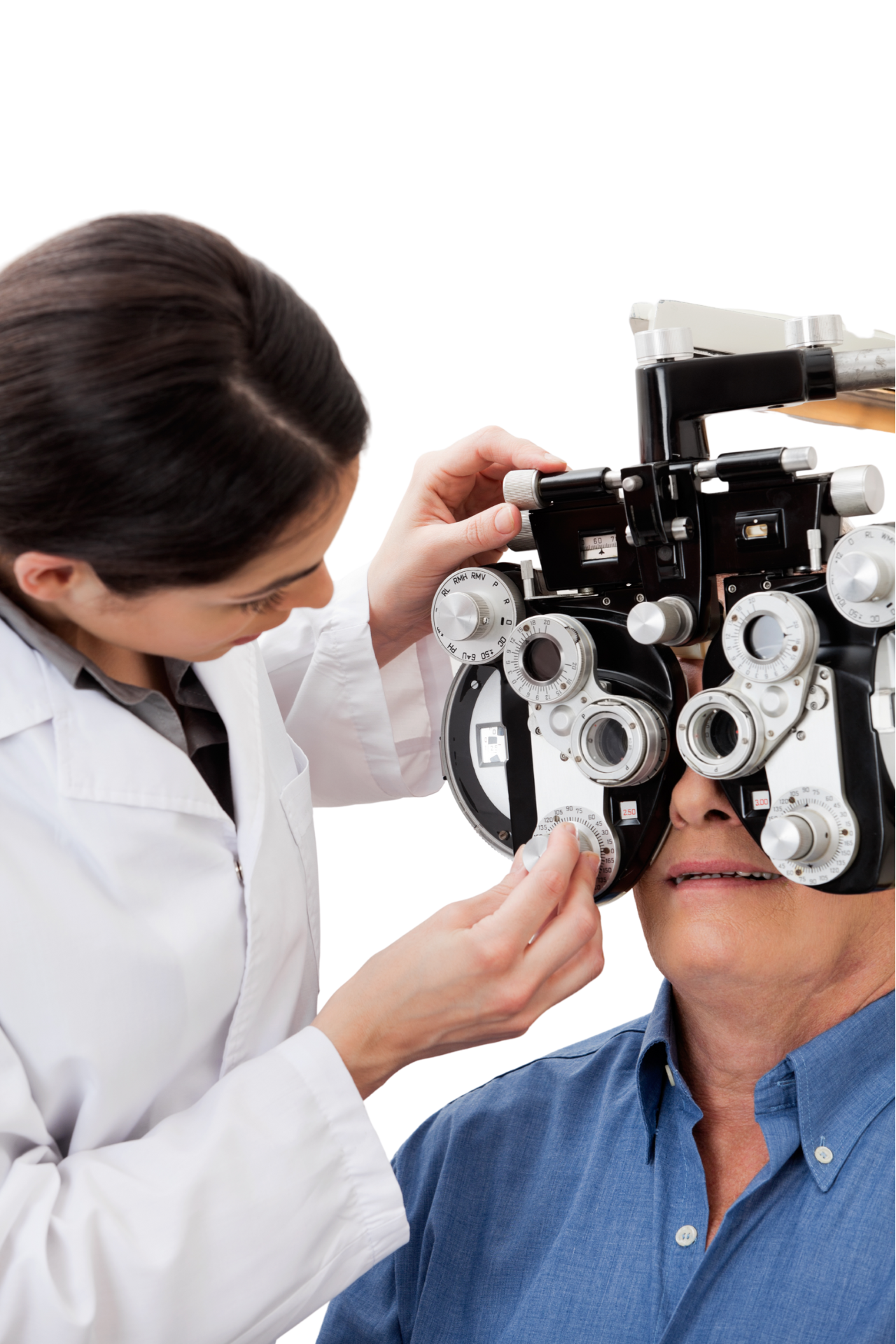
Visual acuity checks how clearly each eye can identify letters or symbols at a standard distance. A refraction test then estimates the spectacle power that provides clearer focus. Results help assess myopia, hyperopia, astigmatism and age-related near-vision difficulty. The numbers on a prescription do not establish whether you have glaucoma, cataract or a retinal condition.
2. Slit-lamp examination
The slit lamp is a microscope with a bright, focused beam of light. It helps assess the eyelids, tear film, conjunctiva, cornea, anterior chamber and lens. For a patient with dry, gritty eyes, the examination may help identify surface inflammation or poor tear quality. For someone experiencing increasing glare, it may reveal lens clouding associated with cataract. Findings are interpreted alongside the patient’s history and other tests.
3. Intraocular pressure measurement
Tonometry measures the pressure inside the eye. It is one part of glaucoma assessment, not a stand-alone diagnosis. Some people with elevated pressure never develop glaucoma, while others experience optic-nerve damage despite measurements within the commonly quoted range. The clinician considers the optic nerve, corneal characteristics, visual field and individual risk profile when deciding what needs monitoring.
4. Dilated retina and optic-nerve assessment
Dilating drops widen the pupil so the clinician can examine structures at the back of the eye more thoroughly. This is particularly relevant in selected people with diabetes, concerning floaters, unexplained vision changes or suspected optic-nerve disease. A dilated examination is not necessarily required at every visit, but when advised it can provide information a spectacles test cannot.
5. Corneal mapping and additional imaging
Corneal topography studies the shape and curvature of the cornea. It may be appropriate for irregular astigmatism, possible keratoconus or assessment before refractive procedures. Other tests, such as visual-field examinations, retinal scans or lens measurements, may be recommended according to the suspected condition. Not every patient needs every investigation.
How to understand the main findings on your eye report
An eye report can feel confusing because it contains several numbers and abbreviations. SPH usually describes the spherical lens power; CYL and Axis describe astigmatism correction; ADD indicates near addition where prescribed. These are optical measurements rather than a complete health assessment. The letters OD and OS commonly refer to right and left eye. A numerical eye-pressure reading should be interpreted by an eye professional and not compared with another person’s number in isolation.
A useful question is not simply “Is my report normal?” but “Which finding explains my symptoms, which findings need monitoring, and which would change the treatment plan?” Ask whether the next step is observation, a different prescription, drops, further imaging, treatment or specialist review. Before leaving, request the diagnosis in plain language and an appropriate review interval.
Five common situations and how the consultation may differ
Gradually cloudy vision or increasing night glare
A patient who notices fading colours, difficulty reading signs or bright halos during night driving may need assessment of the lens, refraction and the back of the eye. Cataract is one possible cause, but dry eye, corneal changes and other conditions can also affect visual quality. If cataract is confirmed, the conversation should focus on daily-life impact and whether surgery is appropriate, rather than treating the diagnosis alone as an automatic indication for surgery.
Learn about cataract assessment and treatment in Ludhiana: https://baatheyecare.com/cataract-surgery-in-ludhiana/
A child who squints, tilts the head or avoids reading
Children may not be able to explain reduced vision, especially when one eye sees better than the other. Evaluation may involve age-appropriate vision testing, eye alignment, cycloplegic refraction and other checks. Early assessment can identify refractive errors, amblyopia or squint and help determine whether glasses, patching, follow-up or another intervention is indicated. A school screening result is helpful, but does not replace a full examination when symptoms or risk factors are present.
Read about paediatric eye assessments: https://baatheyecare.com/paediatric-eye-hospital-in-ludhiana/
Eye-pressure concerns or family history of glaucoma
Glaucoma often progresses without obvious early symptoms. People with a close family history, suspicious optic-nerve findings or other risk factors may need a structured plan that includes pressure measurements, optic-nerve evaluation and visual-field testing. The follow-up interval is individualized; it should not be decided from age or a single pressure reading alone.
Distorted sight, sudden floaters or a shadow
New flashes, a sudden shower of floaters, or a dark curtain across part of the vision require urgent ophthalmic evaluation, because a retinal tear or detachment must be excluded. Sudden vision loss, severe eye pain, significant injury and sudden double vision also require prompt medical attention. Do not wait for a routine appointment or rely on a blog to decide that these symptoms are harmless. Contact emergency eye care immediately.
Spectacle removal or a new contact-lens prescription
Refractive treatment decisions depend on much more than spectacle power. Corneal shape, thickness, ocular surface health, prescription stability, age and overall eye health can influence suitability. A careful assessment may find that glasses or contact lenses remain a better option. The goal of counselling should be realistic expectations and informed consent, not an assumption that every person is a surgical candidate.
Questions worth asking before agreeing to treatment
A productive consultation gives you enough information to participate in the decision. Ask what has been diagnosed, how certain that diagnosis is, whether treatment is needed now, what alternatives exist and what might happen if you delay. If surgery is discussed, ask about the expected benefits, meaningful risks, possible need for spectacles or further care, and the follow-up arrangements. For a long-term condition, ask what change in symptoms should bring you back earlier.
It can help to repeat the plan in your own words before you leave. For example: “I am using these drops for this reason, I should return in this interval, and I should seek urgent care if this symptom appears.” Clear instructions matter as much as choosing the correct test.
When should you schedule an eye examination?
There is no single schedule for everyone. Frequency depends on age, symptoms, contact-lens use, prior eye disease and factors such as diabetes or a family history of glaucoma. Professional guidance for adults without risk factors generally recommends periodic comprehensive examinations, with shorter intervals as people age. Anyone with symptoms should be evaluated according to their clinical urgency, regardless of when their last routine examination occurred.
People with diabetes may require regular dilated eye examinations even when eyesight seems unchanged. Children should be examined when there are concerns about alignment, reading, a failed school screening or developmental risk factors. If you have already been given a personalized follow-up plan, follow that advice rather than a generic schedule online.
Choosing an eye hospital in Ludhiana for continuity of care
When comparing local options, look for a clear route from assessment to diagnosis and, where necessary, ongoing follow-up. Ask whether the clinic can explain what the tests mean, whether it offers the specific evaluation your condition requires, and how it handles referrals or urgent symptoms. Consistent records matter when pressure readings, corneal maps or visual fields need comparison across visits.
Baath Eye Care Centre lists services covering cataract, refractive surgery, glaucoma, paediatric ophthalmology, squint and neuro-ophthalmology on its official website. Dr. Jagroop Singh Baath is named on the centre’s eye-hospital information page. Its Model Town Extension location may be convenient for patients living or working in Ludhiana who require an initial examination or follow-up. Availability of any particular investigation or procedure should be confirmed when booking.
Baath Eye Care Centre official website: https://baatheyecare.com/
Overview of eye hospital services and doctor information: https://baatheyecare.com/eye-hospital-in-ludhiana/
What to do after the appointment
Keep a copy of your prescription and clinical findings. Note the date of the visit, your medication instructions and the next recommended review. If a test needs repeating, ask why: sometimes the purpose is to distinguish normal measurement variation from a genuine change over time. Do not discontinue prescribed glaucoma or other eye medication because symptoms improve or because you feel well. Seek clarification from the treating clinician if you experience side effects or are unsure about the directions.
For families managing eye care for a child or older relative, having one folder of previous reports can make appointments more efficient. For people considering elective procedures, a second discussion before making a decision can be useful when the options are complex or personal expectations are difficult to meet.
Frequently Asked Questions
1. Should I stop wearing my glasses before an eye examination?
No. Bring the spectacles you normally use. The doctor may check your vision with and without them and may compare your current correction with a new refraction.
2. Can I eat normally before a routine eye check-up?
Usually yes, unless the clinic has provided instructions for a specific test or procedure. Continue regular medicines unless your treating clinician advises otherwise.
3. Why might my eye power change while the eye is otherwise healthy?
Focusing needs can change with age, and dry eye or blood-glucose variation may temporarily alter clarity. The ophthalmologist checks for other causes when changes are unexpected.
4. Can an eye-pressure test alone tell me whether I have glaucoma?
No. Eye pressure is one factor. A glaucoma assessment may also require optic-nerve evaluation, a visual-field test and additional investigations based on risk.
5. Will the doctor need to dilate my pupils at every visit?
Not necessarily. Dilation depends on the reason for the visit, your symptoms and whether a detailed retinal or optic-nerve examination is indicated.
6. What if my child can see the school board but still struggles with reading?
An eye examination can assess focusing, refractive error, alignment and ocular health. Learning difficulties have many possible causes, so a normal eye examination may lead to assessment of other factors.
7. How should I prepare for a corneal topography test?
Tell the clinic if you use contact lenses. Staff can advise whether you need to stop wearing them temporarily before accurate measurements.
8. Does blurry vision always mean cataract surgery is needed?
No. Blurriness has several possible causes, and even a diagnosed cataract does not always require immediate surgery. The decision depends on examination findings and how vision affects daily activities.
9. Are sudden flashes or new floaters a reason for urgent care?
Yes. A sudden increase in flashes or floaters, especially with a shadow or curtain in vision, needs urgent examination to exclude retinal problems.
10. How can I book an appointment at Baath Eye Care Centre in Ludhiana?
Contact the centre by phone at +91 62 62 62 77 55 or use its official contact page. Confirm appointment timing and whether you need dilation or a particular test.
Appointments and contact information
Baath Eye Care Centre | 329 CX, Model Town Extension, Model Town, Ludhiana, Punjab 141002 | Phone: +91 62 62 62 77 55 | OPD listed on the official contact page: Monday to Saturday, 9:00 AM to 6:00 PM. Please confirm timings, availability and any test-specific preparation when making your appointment. For sudden vision loss or other emergency symptoms, seek urgent eye care rather than waiting for routine OPD hours.
Official contact and appointment information: https://baatheyecare.com/contact-baath-eye-care-centre/
A clearer conversation starts with a complete assessment
An eye examination is most valuable when the numbers and findings are connected to the person behind them: their symptoms, daily activities, health conditions and questions. If you are looking for an eye hospital in Ludhiana, prepare a short history, bring earlier reports and leave with a clear plan. Understanding what was examined and why can make the next steps more informed, whether those steps involve reassurance, a prescription, monitoring or treatment.